
RUNNER CREW INFORMATION AND TIPS
How to support your runner.
THE JOB
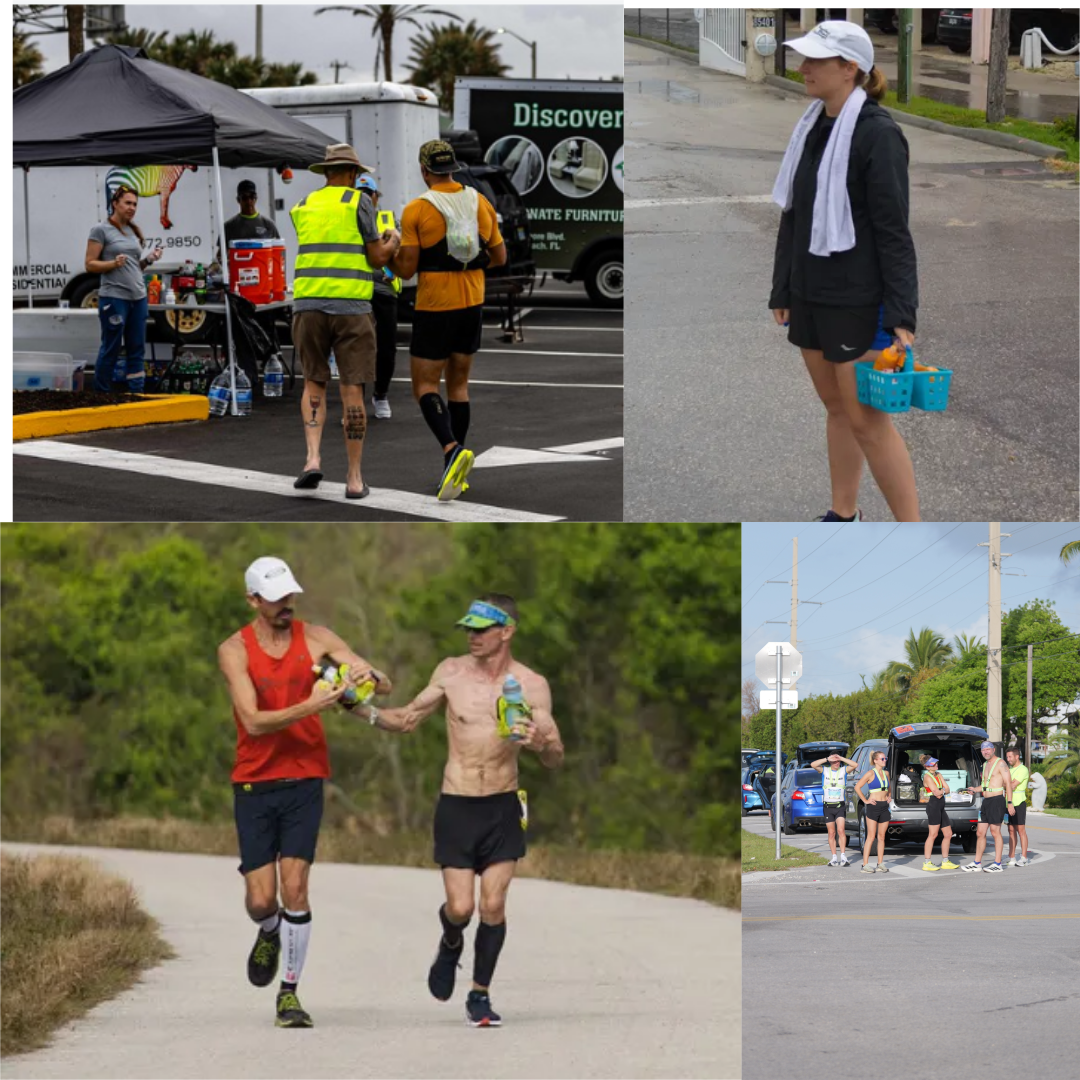
A runner crew is one or more people, working as a team, who become the runner’s primary source of support and encouragement throughout the race.
The crew leap-frogs the runner in a dedicated support vehicle, meeting the runner every few miles at allowable locations along the route.
The crew member is an expediter, caregiver, nursemaid and cheerleader.
Crew keeps the runner on an agreed-upon race plan schedule with hydration, nutrition, electrolytes, rest and all other plan details.
Manages exposure to the elements--the May heat, in particular
Organizes and manages all food, gear, clothing, and equipment, including crew’s own items.
May or may not include pacing the runner where allowed.
SELECTING YOUR CREW & CREW CHIEF
Crewing can be an emotional as well as physical test
Crew members should be healthy and relatively fit
They do not have to be runners, although the experience is very helpful
Generally, significant others or close family members are not the best choice
Friends who are able to remain objective when the runner is struggling
Work your address book, solicit through the KEYS100® Facebook page, contact local running clubs and running stores
Team player: no heroes need apply. Compatibility is a must; drama is definitely not
People who focus on the runner, yet take care of themselves during the race
Keep the runner on goal and motivated
Organized, capable, and flexible; can handle high stress, high demand situations--and sleep deprivation
Comfortable in extreme environments
Previous crew experience or familiarity with the race and race venue are bonuses
IDEAL CREW SIZE
100-mile race: Two to three people are ideal exclusive of pacing. One person will find it extremely difficult to manage the volume of tasks involved and the speed required at each meet-up. Driving and parking, then refilling bottles, adding ice to bandanas, finding and presenting food and drink options, clean-up and prep for next stop, quickly retrieving a change of socks or other clothing or night gear, setting-up a chair, dealing with blistered feet, sunblock, massage, etc., all while motivating and moving the runner along, AND taking care of yourself so you’re in shape to help at hour 20 or 25 as you were at the start. For runners who want pacing support, add one person. [More on pacing later.*]
50-mile race: The same recommendation applies for 50-mile runners as for 100-milers. Efficiency and speed recommend two people at a minimum to support the runner. Add one if pacing.
50-kilometer race: A crew of one can manage the shorter duration of the 50K, but a crew of two is still advised. Again, speed and efficiency are important so that the runner isn’t wasting time at every meet-up. One person will struggle to do it all. Add one for pacing
PREPARING THE CREW
Hold at least one pre-race meeting or online call.
The runner reviews all expectations and race-day goals. Clarity and alignment are vital around the race plan: expected finish time, pace, and splits, best case & worse case scenarios.
Runner reviews logistics, including transportation to the race and hotels before and afterward, the race vehicle, gear borrowed and to be bought, food, and other shopping. Who pays for what?
Know the official race calendar, runner’s schedule, and any pre-race prep or post-race R&R
Must know all race rules, for which runner and crew are equally accountable.
Be clear about information runner will want during the race, such as time splits or whereabouts of competition
How will runners communicate what they want at the next meet-up? Decide at the prior stop? Use walkie-talkie directly or through pacer and call ahead?
BE CLEAR ABOUT RUNNER REQUIREMENTS DURING THE RACE:
Food Preferences and consumption schedule
Fluid/electrolytes preferences and schedule—e.g., fresh bottle every stop?
Cooling (ice bandana, cold-soaked towel, spray bottle)
Medical (blisters, pain meds, prescriptions, sun protection, etc.)
Clothes, including night dress
Other gear (sunglasses, hat or visor, arm sleeves, reflective vest, lights)
Pacing preferences*
Logging data—time, type, and quantity of calories, fluids, and electrolytes intake. Frequency of urination and toilet breaks
Friday or Saturday morning check-in; "Experts Panel" attendance
Crew registration required
Preparing the crew vehicle—by whom and when? Decoration.
Before sleeping the night before, confirm corral start time. Set alarm for wake-up, breakfast (?), drive time to the start, bathroom time. Review overall time allowed to complete the race and interim cut-offs for 100-milers. Note timing station locations and on-course medical support. Don’t forget to bring racer bib (with pins or race number belt), required safety garment for everyone, blinking LED lights for nighttime, and EVERUYTHING ELSE on your list.
EQUIPMENT & SUPPLIES
ON THE GO
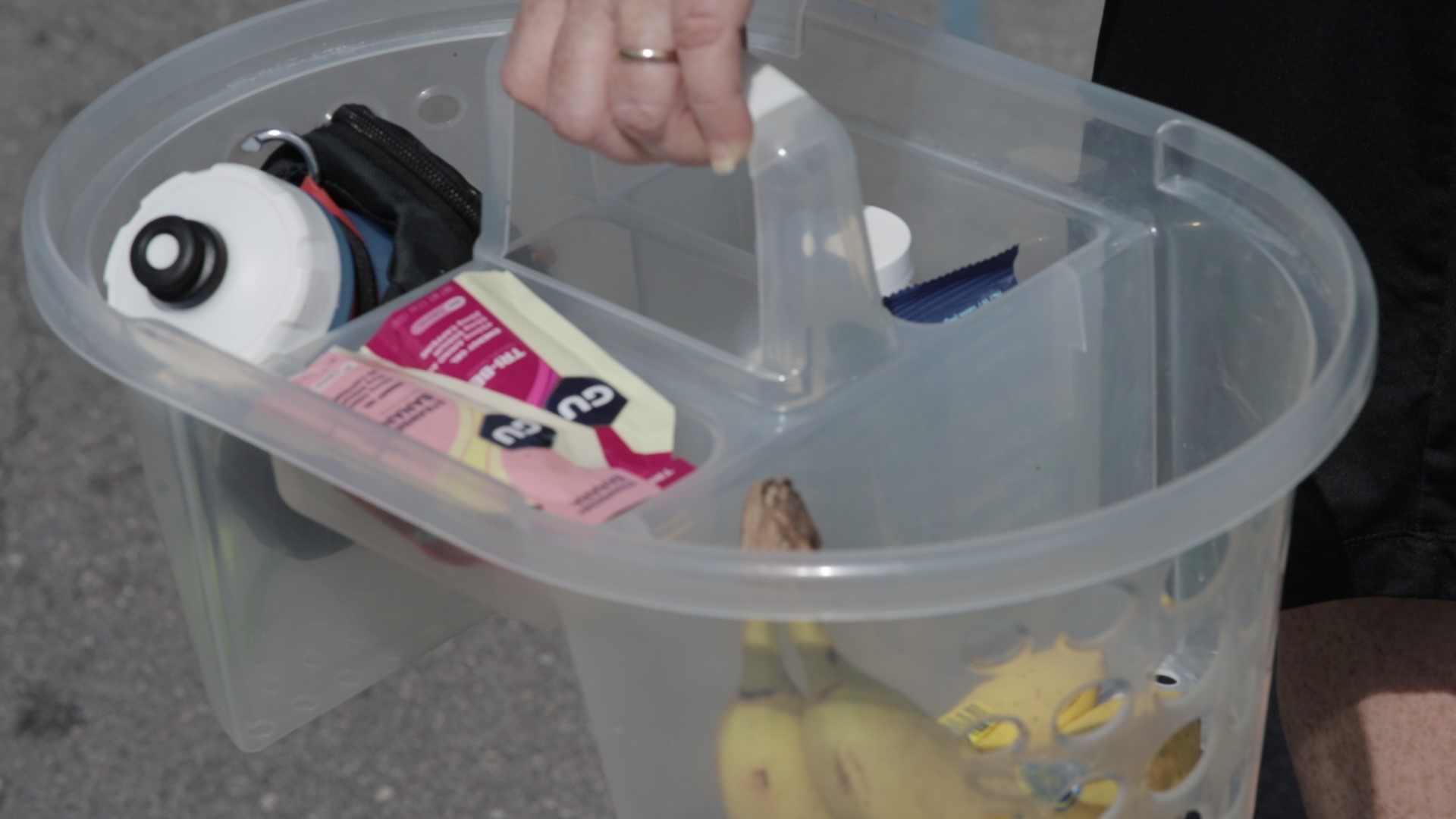
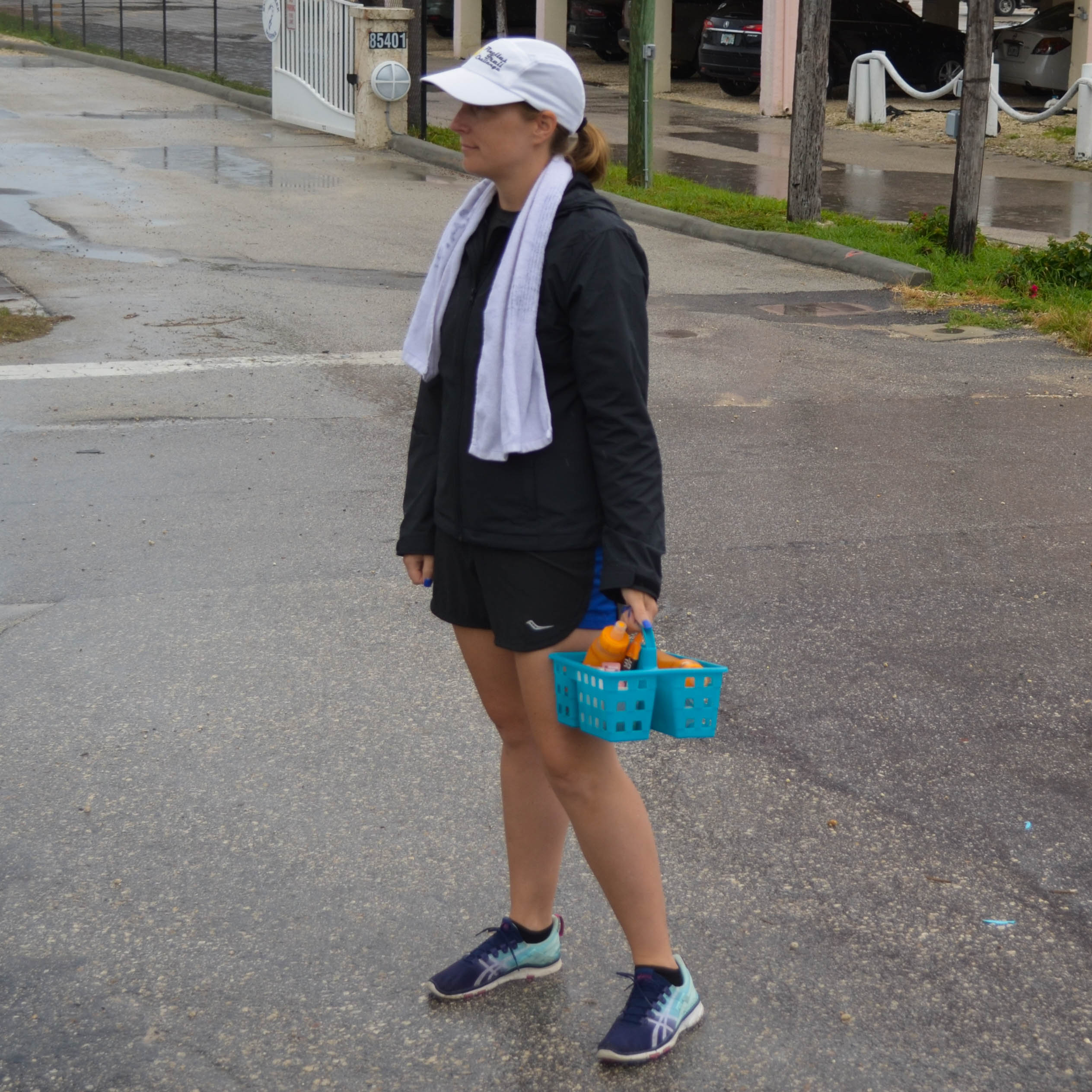
Offering choices when crew and runner meet; use a handy garden tool-type caddy like the one shown to display food and other options, collect "used" bottle and trash.
GET ORGANIZED
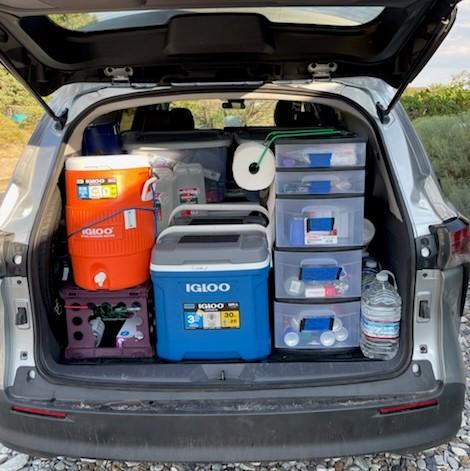
Runner’s Gear: How to Get Organized; What Must Be Kept Most Accessible (Must also allocate storage space for runner post-race items and crew baggage) Start with everything properly organized and clean--and keep it that way. Hang a trash bag in a convenient location Be sure the entire crew knows the organization. Separate large coolers for “clean” and “dirty” (and backup supply) ice. 5-Gallon Drink cooler for easier filling of water bottles. Plastic stack of drawers for organization. Folding chair(s), workspace; see suggested gear list. Garden-type tool caddy to use when meeting runner.
CREWING TIPS
At every meet-up, tell your runner the distance to the next stop and what to expect during that next segment.
Being prepared and staying on top of runner needs helps to guarantee your runner's success.
WHAT TO BRING: SOME IDEAS TO CONSIDER
CLOTHES & GEAR
SUPPLIES & DISPOSABLES
Shoes and socks
Underwear/sports bras
Shorts and Pants
Tops – long and short sleeved; arm sleeves
Rain gear
Hat & visor options, buff, bandana
Sunglasses
Sunscreen
Lip balm
“Trail Toes” or another lubricant—for more than just feet
Hand-held bottles, hydration belts or pack
Watch, charging device
Night clothes
Fresh clothes and shoes
Possibly warmer items
Fresh hat, buff, bandana for night or day two
Required nighttime reflective clothing and blinking lights
Glasses Safety:
Reflective vest/tape
Flashers, Headlamps, hand-held lights or similar lighting
Extra batteries; back-up Additional Items
Cell or satellite phone, other music listening device
Carrying device—belt, pack, arm-holster
Headphones, batteries
Repair/sewing kit
Blister kit
Trash bags
Ziplock bags in various sizes to store food; sort gear, etc...
Paper towels
Clean white cotton towels & washcloths
Paper cups
Paper plates or bowls
Forks, knives, spoons
Kitchen knife, cutting board
Your own TP supply
Biffy Bags (for toilet emergency)
Hand sanitizer
Disposable gloves
Wipes
Liquid soap
Ice scoop
Beverage containers, including large for mixing
Milk crates, plastic drawer stack or mesh bags for organization and quick access
BEVERAGE
Water: one-gallon jugs and some individual bottles
Ice: quantity and proper handling
All selected beverages: Coke, ginger ale, iced tea, Gatorade, Ensure, etc.
FOR RUNNERS & CREW
Food
Perishables
Solid foods
Liquid meal replacements
CREW CHOICES-CREW NEED TO EAT TOO!
ADDITIONAL ITEMS
Cash and credit card for fuel, ice & supplies, meals and snacks for runner and crew.
Pen & paper/ logbook; extra pens.
Race plan with best case/worst case scenario spreadsheet from runner.
Two-way radios between crew and runner/pacer.
Blue painter’s tape to affix “Caution” sign and race number to vehicle OR magnetic signs OR window crayons, etc.
Duct tape, knife or multi-tool.
“Jet Boil” or similar, with propane cannister, and pot for boiling water.
Supplemental interior light when stopped.
Identifying lights for outside of vehicle at night. (Minivans all look the same in the dark.)
Scale to periodically weigh runner. This is to detect over- or under-hydration
Water sprayer
RACE DAY
Crewing 101
You are there to help the runner achieve their goal.
Crew leapfrogs the runner, driving ahead to the next allowable support location.
As the runner approaches, crew should already be outside the vehicle and positioned to meet them.
Keep the runner moving whenever possible. Exchange bottles, ice bandanas, and nutrition while
moving.
Tip: Use a garden tool caddy to carry food, drinks, and supplies for quick exchanges.
Fluids & Electrolytes
- Fresh bottle ready at every stop
- Maintain electrolyte schedule
- Keep written record
- Bring tablets, mixes, and backup drinks
Nutrition
- Offer small portions
- Keep options simple
- Use gels, Ensure, fruit, apple sauce, wraps or sandwiches
- Night options: soup, ramen, mashed potatoes
Medical
- Keep medical contact info handy
- Call 911 in emergencies
- Monitor sun exposure
- Manage blisters and soreness
- Watch for exhaustion and hallucinations
Monitor Conditions
- Heat exhaustion
- Dehydration or overhydration
- Headache, dizziness, nausea
Additional Tips
- Prepare for night gear before 7:30pm
- Keep breaks short
- Notify officials if runner withdraws
Crew Management
- Stay positive
- Work as a team
- Do not bring issues to the runner
- Take care of yourself
Pacing
- Follow pacing rules
- No muling allowed
- Limit pacing in extreme heat
Summary
- Know all rules
- Prepare thoroughly
- Stay flexible
- Be ready for anything
Family & Friends
Due to limited parking, non-crew vehicles are not allowed at support locations.
They may watch the start and finish or cheer from non-race areas.


Quick Links
Contact us
Bob Becker
Race Director
KEYS100®
c/o UltraSports LLC
520 Orton Avenue #203
Ft. Lauderdale FL 33304
Copyright 2026. Ultra Sports llc. All Rights Reserved.